

Ever noticed how we learn best not by reading, but by doing? Think about how you mastered driving a car or using new software—you didn’t just memorise instructions; you practiced, made mistakes, and refined your skills over time.
That’s exactly what Kolb’s Experiential Learning Cycle explains. It’s a framework that shows how learning happens through experience, reflection, and application—a process that’s key to effective workplace training and eLearning.Explore: Out with the old, In with the new: 7 Ways to Modernise Learning Content
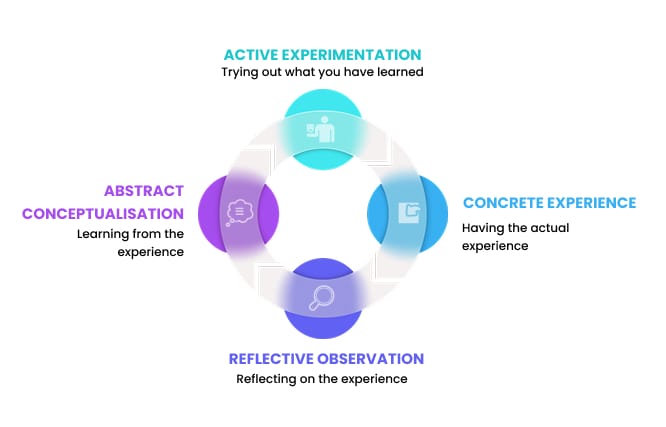
Developed by David Kolb in 1984, the Experiential Learning Cycle describes learning as a continuous process rather than a one-time event. It’s built on the idea that we learn by doing, reflecting, thinking, and adapting.
Kolb’s model consists of four stages, each contributing to deeper learning:
This is where learning starts—with an experience. We retain information better when we experience it first-hand, rather than just reading about it. It could be a hands-on task, a real-world challenge, or an interactive simulation
Examples:
After the experience, learners pause and reflect on what happened. This step helps identify patterns, challenges, and successes, making learning more meaningful. Reflection helps turn experiences into insights, which are essential for improvement.
Examples:
At this stage, learners connect their experiences with theory. They begin to analyse the experience, relate it to existing knowledge, and create a plan for improvement.
Without understanding the ‘why’ behind learning, experiences remain isolated events rather than long-term knowledge.
Examples:
Finally, learners take what they’ve learned and apply it in new situations. This is where learning becomes practical and transferable. If learning isn’t applied in the real world, it won’t stick. Active experimentation turns theory into practice.
Examples:

Kolb’s Experiential Learning Cycle is widely used in workplace training, eLearning, and leadership development because it aligns with how adults learn best—through experience, reflection, and application. You can apply it through:
Example: Instead of a traditional “watch-and-complete” leadership course, create an interactive module where managers handle a virtual team conflict, reflect on their decisions, review leadership models, and then apply their learning in a follow-up scenario.
Kolb’s model reminds us that learning isn’t just about absorbing information—it’s about doing, reflecting, and applying knowledge in meaningful ways.
If your training programmes rely too heavily on passive learning, it may be time to introduce more experiential elements—making learning more engaging, practical, and impactful.
View this post on Instagram
At Visuer, we craft engaging, high-impact eLearning experiences designed to go beyond knowledge transfer—we focus on real behaviour change. Whether you’re looking to integrate experiential learning, interactive scenarios, or real-world simulations, we can help you create learning that sticks.
Let’s talk about transforming your training into an immersive learning journey.
Email us at hello@visuerlab.com or click here to contact us.


